
Luxembourg has a population of only 630,000. Yet it is one of the richest countries in the world. The northern part of the country is rich in agriculture, while the southern part has long been rich in iron ore and is home to one of the world’s leading iron and steel manufacturing centers.
Furthermore, it is a financial powerhouse that has always played the role of a financial center, from the European Economic Community (EEC) after World War II to the current European Union (EU). It has also boasted the world’s highest GDP per capita for more than a decade. The Grand Duke Henri, the ruler of this “small superpower,” received his higher education in England and France, and then went to Switzerland to study politics and economics at the University of Geneva, where fate awaited him. Here fate had a plan for him: he would meet Queen Maria Teresa. She came from a wealthy family that had been exiled from Cuba to the United States during the Revolution.
They fell in love and the Grand Duke Henri proposed marriage. Josephine-Charlotte, the mother of Archduke Henri, was vehemently opposed to this marriage. She had married into the Belgian royal family and could not bear the thought of marrying a “commoner. However, her son’s enthusiasm overcame her, and Grand Duke Henri and Princess Maria Teresa were married in February 1981.
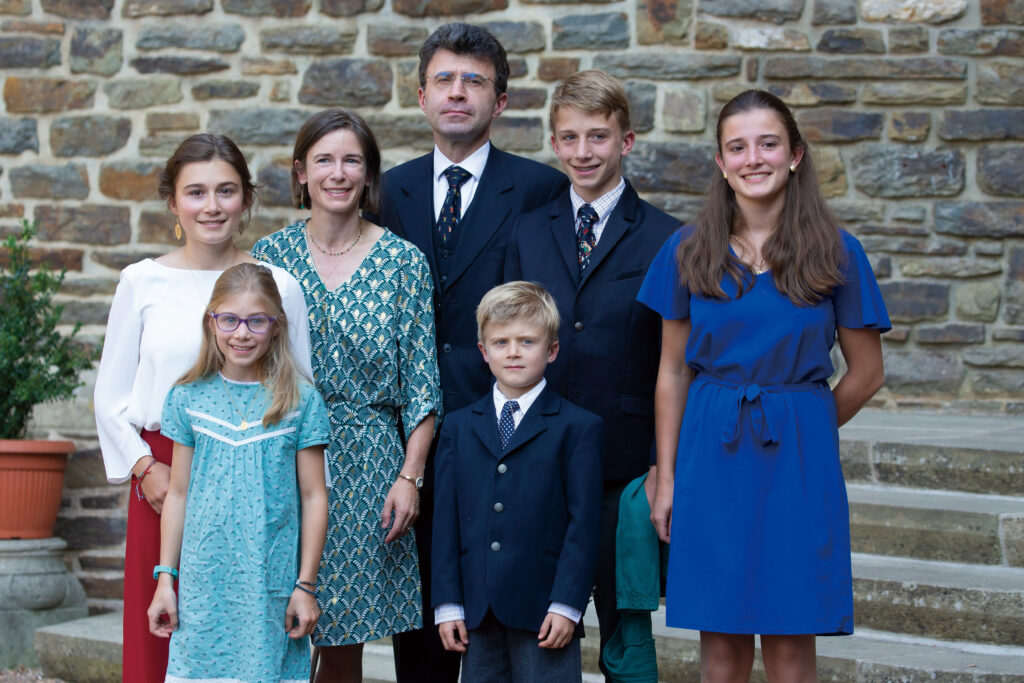
They have since been blessed with four sons and a daughter. Princess Maria Teresa has devoted herself to child-rearing and philanthropy, and has been actively involved in volunteer activities. She has established a number of organizations in Japan to support the disabled and is a UNESCO Goodwill Ambassador.
They were then to rule the country as the Grand Duke and Grand Duchess of Luxembourg from October 2000. Five years later, his mother-in-law Josephine-Charlotte died, never having opened her heart to Princess Maria-Therese until the end.
He is currently leading a happy life with eight children and three grandchildren.